✓ Most cash donations to qualified charities are deductible up to 60% of your Adjusted Gross Income (AGI).
✓ Donations of appreciated stock can offer a double tax benefit: avoiding capital gains tax and receiving a deduction for fair market value.
✓ Itemizing deductions is crucial to claim charitable contributions on your federal tax return.
✓ Proper documentation, including acknowledgment letters from charities, is essential for substantiating deductions.
How It Works
1
Identify Qualified Nonprofits
Ensure the organization is a 501(c)(3) public charity as recognized by the IRS. You can verify this status using the IRS Tax Exempt Organization Search tool.
2
Choose Your Donation Method
Decide between cash, stock, real estate, or other assets. Each method has distinct tax implications and advantages depending on your financial situation.
3
Document Your Contribution
Obtain a written acknowledgment from the charity for any single contribution of $250 or more. Keep meticulous records of all donations, regardless of amount.
4
Itemize on Your Tax Return
To claim charitable deductions, you must itemize on Schedule A (Form 1040). Consult a tax professional to determine if itemizing is more beneficial than taking the standard deduction.
Understanding Charitable Contributions and Tax Deductions
Photo: Gustavo Fring / Pexels
Donating to a nonprofit organization is a selfless act that benefits society, but it also comes with significant financial advantages for the donor. In the United States, the Internal Revenue Service (IRS) offers tax deductions for qualifying charitable contributions, effectively reducing your taxable income and, consequently, your tax liability. However, navigating the rules and regulations surrounding these deductions can be complex. The fundamental principle is that contributions must be made to eligible organizations, primarily those classified as 501(c)(3) public charities by the IRS. These include churches, hospitals, schools, and many other public service organizations. It's crucial to verify an organization's 501(c)(3) status before making a donation if your primary motivation includes a tax deduction. The IRS provides an online tool, the Tax Exempt Organization Search, to help you confirm an organization's eligibility.
The type of donation also plays a significant role in determining the deduction amount and limitations. Cash contributions are often the most straightforward, generally deductible up to 60% of your Adjusted Gross Income (AGI). Non-cash contributions, such as appreciated stock, real estate, or tangible personal property, introduce additional layers of complexity but can also offer greater tax benefits. For instance, donating appreciated stock held for more than one year allows you to deduct the fair market value of the stock on the date of donation, while also avoiding capital gains tax that would have been incurred had you sold the stock and then donated the cash. This 'double benefit' makes appreciated stock a particularly attractive option for many donors. However, the deduction limit for long-term appreciated property is generally 30% of your AGI. Understanding these distinctions is paramount to maximizing the tax benefits of your charitable giving.
Furthermore, the ability to claim these deductions hinges on whether you itemize deductions on your federal income tax return. The Tax Cuts and Jobs Act (TCJA) of 2017 significantly increased the standard deduction, leading many taxpayers who previously itemized to now take the standard deduction. If your total itemized deductions (including charitable contributions, state and local taxes, mortgage interest, etc.) do not exceed your standard deduction, then your charitable contributions will not provide an additional tax benefit. Therefore, it's essential to assess your overall tax situation or consult with a tax professional to determine if itemizing is the optimal strategy for you. Proper record-keeping is another non-negotiable aspect. For cash donations, you need bank records, a canceled check, or a receipt from the organization. For any single contribution of $250 or more, whether cash or property, you must obtain a contemporaneous written acknowledgment from the charity. This acknowledgment must include the amount of cash contributed, a description of any property contributed, and whether the organization provided any goods or services in return for the contribution. Without this documentation, the IRS may disallow your deduction. This meticulous approach to record-keeping ensures that you can substantiate your claims if audited and fully realize the tax advantages of your generosity.
Strategic Giving: Maximizing Deductions with Different Asset Types
Photo: RDNE Stock project / Pexels
Beyond simple cash donations, various asset types offer unique opportunities to enhance the tax benefits of donating to nonprofits. Understanding these strategies can significantly amplify your philanthropic impact while optimizing your personal financial position. One of the most powerful strategies involves donating appreciated securities, such as stocks, mutual funds, or exchange-traded funds (ETFs) that you've held for more than one year. When you donate appreciated stock directly to a charity, you generally avoid paying capital gains tax on the appreciation. If you were to sell the stock first and then donate the cash, you'd owe capital gains tax on the profit, reducing the amount available for donation. By donating the stock directly, you not only bypass this tax but can also deduct the stock's fair market value (up to 30% of your AGI) on your tax return. This dual benefit makes it a highly attractive option for investors with long-term holdings that have significantly increased in value.
Another advanced strategy is the use of a Donor-Advised Fund (DAF). A DAF is a charitable giving vehicle administered by a public charity, allowing you to make a charitable contribution, receive an immediate tax deduction, and then recommend grants from the fund to your favorite charities over time. This approach is particularly beneficial if you have a high-income year and want to front-load your charitable deductions, even if you haven't decided on all the specific charities you wish to support yet. You get the tax deduction in the year you contribute to the DAF, and the assets in the fund can grow tax-free, further increasing your philanthropic capacity. DAFs also simplify record-keeping, as you only need one receipt from the DAF sponsor, regardless of how many individual charities you eventually support through the fund.
Real estate, while more complex, also presents substantial charitable giving opportunities. Donating appreciated real estate, like a home or land, can provide similar tax advantages to donating appreciated stock. You can avoid capital gains tax on the property's appreciation and potentially claim a deduction for its fair market value. However, the process involves appraisals, legal fees, and the charity's willingness and ability to accept and manage real estate. For highly appreciated assets, a Charitable Remainder Trust (CRT) or Charitable Lead Trust (CLT) might be appropriate. A CRT allows you to place assets into a trust, receive income from those assets for a period, and then donate the remainder to charity, receiving an immediate tax deduction for the present value of the future gift. A CLT, conversely, provides income to the charity for a period, with the remainder returning to you or your beneficiaries. These trusts are sophisticated tools best implemented with the guidance of an estate planning attorney and financial advisor, as they involve complex legal and tax considerations. Each of these strategic giving methods requires careful planning and professional advice to ensure compliance with IRS regulations and to maximize the intended tax benefits.
IRS Rules, Documentation, and Avoiding Common Pitfalls
Photo: Kindel Media / Pexels
Navigating the Internal Revenue Service (IRS) rules for charitable contributions is paramount to successfully claiming the tax benefits of donating to nonprofits. The IRS provides strict guidelines to prevent abuse and ensure genuine philanthropic intent. One of the most critical aspects is the requirement for proper documentation. For any single cash contribution of $250 or more, you must obtain a contemporaneous written acknowledgment from the charity. This acknowledgment must state the amount of cash contributed and whether the organization provided any goods or services in return for the contribution. If goods or services were received (e.g., tickets to a fundraising gala), the acknowledgment must provide a good faith estimate of their value, and you can only deduct the amount of your contribution that exceeds this value. For non-cash contributions, the documentation requirements become even more stringent. For property valued over $500, you must file Form 8283, Noncash Charitable Contributions, with your tax return. For property valued over $5,000 (excluding publicly traded securities), a qualified appraisal by an independent appraiser is required, and the appraiser must sign Form 8283. Failing to meet these documentation standards is one of the most common reasons charitable deductions are disallowed during an audit.
Another crucial rule involves the concept of 'quid pro quo' contributions. If you receive a benefit in exchange for your donation, such as dinner, merchandise, or entertainment, you can only deduct the amount of your contribution that exceeds the fair market value of the benefits received. For example, if you pay $100 for a charity dinner ticket and the fair market value of the dinner is $40, you can only deduct $60. The charity is generally required to inform you of the deductible portion. Additionally, not all contributions are deductible. Donations to individuals, political organizations, or foreign organizations (unless specifically covered by a treaty) are generally not deductible. Even contributions to a 501(c)(3) organization must be truly charitable; payments for tuition, membership dues that primarily provide personal benefits, or the value of your time and services are not deductible. While you cannot deduct the value of your volunteer hours, you can deduct unreimbursed out-of-pocket expenses directly related to your volunteer work, such as mileage or supplies, provided you keep meticulous records.
Avoiding common pitfalls requires diligence and an understanding of these rules. One frequent mistake is not verifying the charity's 501(c)(3) status. Another is failing to obtain the necessary written acknowledgments, especially for larger donations. Donors sometimes mistakenly believe that a canceled check is sufficient for donations of $250 or more, which is incorrect; a written acknowledgment from the charity is required. Overvaluing non-cash contributions, particularly complex assets like art or real estate, is another red flag for the IRS, underscoring the importance of qualified appraisals. Furthermore, confusing the standard deduction with itemized deductions can lead to claiming deductions that won't actually impact your tax liability. It's vital to remember that to claim any charitable contribution, you must itemize on Schedule A. Staying informed and consulting with a tax professional are your best defenses against potential issues and ensure you fully realize the tax benefits of your generosity.
Smart Giving Strategies: Tips and Common Mistakes to Avoid
Photo: Leeloo The First / Pexels
To truly maximize the tax benefits of donating to nonprofits, it's essential to employ smart giving strategies and be aware of common mistakes that could negate your efforts. Here are some key tips and pitfalls to avoid:
**Tips for Smart Giving:**
* **Bunching Deductions:** If your itemized deductions are close to the standard deduction, consider 'bunching' your charitable contributions into one year. For example, instead of donating $5,000 annually for two years, donate $10,000 in one year. This might allow you to itemize in the 'bunching' year and take the standard deduction in the alternate year, leading to greater overall tax savings. A Donor-Advised Fund (DAF) is an excellent tool for this strategy.
* **Donate Appreciated Assets:** As discussed, donating appreciated stock or other long-term capital gain property directly to a charity can provide a double tax benefit: avoiding capital gains tax and receiving a deduction for the fair market value.
* **Consider Qualified Charitable Distributions (QCDs):** If you are 70½ or older and have a traditional IRA, you can make a Qualified Charitable Distribution (QCD) directly from your IRA to a qualified charity. These distributions count towards your Required Minimum Distribution (RMD) but are excluded from your taxable income, which is particularly beneficial if you take the standard deduction and cannot otherwise deduct charitable contributions.
* **Evaluate Your AGI Limits:** Be mindful of the Adjusted Gross Income (AGI) limits for charitable deductions. Cash contributions are generally limited to 60% of AGI, while appreciated non-cash property is limited to 30% of AGI. Any excess contributions can often be carried forward for up to five years.
* **Keep Meticulous Records:** This cannot be stressed enough. Maintain a detailed log of all donations, including the date, amount, recipient, and method of payment. For non-cash items, include a description and any appraisals. Always get a written acknowledgment for donations of $250 or more.
**Common Mistakes to Avoid:**
* **Not Itemizing:** If your total itemized deductions don't exceed the standard deduction, your charitable contributions won't provide an additional tax benefit. Always compare your potential itemized deductions to the standard deduction.
* **Forgetting to Verify 501(c)(3) Status:** Donating to an organization that isn't a qualified public charity means your contribution is not tax-deductible.
* **Lack of Proper Documentation:** Failing to obtain the required written acknowledgments for donations of $250 or more, or not getting a qualified appraisal for significant non-cash gifts, can lead to disallowed deductions.
* **Deducting the Value of Your Time/Services:** Your volunteer time, no matter how valuable, is not deductible. Only unreimbursed out-of-pocket expenses directly related to volunteering are.
* **Overvaluing Non-Cash Contributions:** Inflating the value of donated items, especially used clothing or household goods, is a red flag for the IRS. Be realistic and, for significant items, seek professional appraisals.
* **Confusing Personal Benefits with Charitable Giving:** If you receive a significant personal benefit (e.g., an expensive item at an auction, tickets to a show) in exchange for your donation, you can only deduct the amount exceeding the fair market value of that benefit.
By understanding these strategies and avoiding common missteps, you can ensure your generous spirit translates into meaningful tax savings.
Comparison
Feature
Cash Donation
Appreciated Stock
Donor-Advised Fund (DAF)
Qualified Charitable Distribution (QCD)
Deduction Type
Fair Market Value
Fair Market Value
Fair Market Value (at contribution)
Excluded from Income
Capital Gains Avoidance
N/A
✓
✓
N/A
AGI Limit (General)
60%
30%
60% (cash), 30% (stock)
N/A (reduces taxable income)
Immediate Tax Deduction
✓
✓
✓
N/A (reduces taxable income)
Minimum Age
None
None
None
70½
Complexity
Low
Medium
Medium
Low to Medium
Record Keeping
Receipt/Bank Record
Brokerage Statement/Acknowledgment
DAF Sponsor Acknowledgment
IRA Custodian Statement
What Readers Say
★★★★★
"Learning about the tax benefits of donating to nonprofits completely changed my approach to giving. My tax advisor helped me set up a Donor-Advised Fund, allowing me to consolidate my donations and get a larger deduction in a high-income year. It's a win-win for my finances and the causes I care about."
Sarah J. · Austin, TX
★★★★★
"I used to just write checks, but after reading up on the tax benefits of donating appreciated stock, I decided to try it. The process was surprisingly simple, and I saved a significant amount on capital gains tax while still supporting my favorite charity. Highly recommend exploring this option!"
Michael D. · Chicago, IL
★★★★★
"As someone over 70, the Qualified Charitable Distribution (QCD) from my IRA has been a game-changer. It fulfills my RMD and reduces my taxable income, all while supporting my local animal shelter. The tax benefits of donating to nonprofits through this method are truly impactful."
Emily R. · Seattle, WA
★★★★★
"Understanding the AGI limits and documentation requirements for charitable deductions was crucial. While the process can be a bit detailed, the tax savings I realized from my larger donations made it absolutely worth the effort. Just be sure to keep good records!"
David K. · Miami, FL
★★★★★
"My financial advisor walked me through how the tax benefits of donating to nonprofits could integrate into my estate planning. We set up a charitable trust that provides for my family while ultimately benefiting my chosen causes. It's a powerful tool for legacy giving."
Jessica L. · Denver, CO
Frequently Asked Questions
What are the primary tax benefits of donating to nonprofits?
The primary tax benefit is the ability to deduct your charitable contributions from your taxable income, which reduces your overall tax liability. Depending on the type of donation (cash vs. appreciated property), you may also avoid capital gains taxes on appreciated assets, offering a 'double benefit.' These deductions are available if you itemize on your federal tax return.
Do I have to itemize my deductions to claim charitable contributions?
Yes, generally, to claim a tax deduction for your charitable contributions, you must itemize your deductions on Schedule A (Form 1040). If your standard deduction is higher than your total itemized deductions, then taking the standard deduction would be more beneficial, and your charitable contributions would not provide an additional tax benefit, unless you are making a Qualified Charitable Distribution (QCD) from an IRA.
What kind of documentation do I need for my donations?
For cash donations under $250, a bank record or receipt is sufficient. For any single donation of $250 or more (cash or property), you must obtain a contemporaneous written acknowledgment from the charity. For non-cash property valued over $500, you need to file Form 8283, and for property over $5,000 (excluding publicly traded securities), a qualified appraisal is required.
Can I deduct the value of my time spent volunteering?
No, the IRS does not allow you to deduct the value of your time or services volunteered. However, you can deduct unreimbursed out-of-pocket expenses directly related to your volunteer work, such as mileage driven for charitable purposes (at a specific rate set by the IRS), or the cost of supplies purchased for the charity, provided you keep proper records.
How do Donor-Advised Funds (DAFs) compare to direct donations?
DAFs offer an immediate tax deduction when you contribute assets to the fund, even if you recommend grants to charities later. They simplify record-keeping and allow assets to grow tax-free. Direct donations also provide a deduction, but DAFs offer more flexibility for timing deductions and grant-making, especially for larger, complex gifts or 'bunching' strategies.
Who should consider utilizing the tax benefits of donating to nonprofits?
Anyone who itemizes their deductions, has appreciated assets (like stocks or real estate), or is aged 70½ or older with an IRA should strongly consider utilizing these benefits. High-income earners can particularly benefit from strategies like DAFs or donating appreciated securities to offset taxes and maximize impact.
Are there any risks or penalties associated with claiming charitable deductions?
The main risk is having your deductions disallowed if you fail to meet IRS requirements, particularly regarding documentation or verifying the charity's eligibility. Penalties can apply if the IRS determines you intentionally overstated the value of non-cash contributions or made fraudulent claims. Always ensure your donations are to qualified charities and you maintain meticulous records.
What future trends might impact charitable giving tax benefits?
Future trends could include changes to the standard deduction amount, adjustments to AGI limits for charitable contributions, or new legislative incentives for specific types of giving. The continued popularity of Donor-Advised Funds and the focus on impact investing within philanthropy are also evolving areas that may see future regulatory or tax implications.
Unlock the full potential of your generosity. By strategically leveraging the tax benefits of donating to nonprofits, you can make a greater impact on the causes you cherish while optimizing your financial well-being. Consult with a qualified tax professional or financial advisor today to craft your personalized giving strategy and transform your charitable contributions into powerful tax advantages.

 Photo: Gustavo Fring / Pexels
 Photo: RDNE Stock project / Pexels
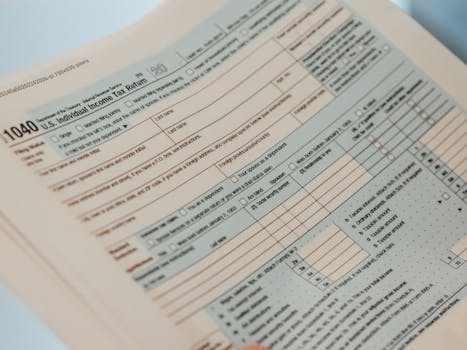 Photo: Kindel Media / Pexels
 Photo: Leeloo The First / Pexels