Boost Impact: Nonprofit Consulting Services US
nonprofit consulting services US

Boost Impact: Nonprofit Consulting Services US

Unlock your organization's full potential and achieve sustainable impact with tailored strategic guidance.

Find Your Expert

Key Takeaways

  • ✓ Nonprofit consulting addresses critical needs from fundraising to governance.
  • ✓ The US nonprofit sector is vast, with over 1.8 million organizations.
  • ✓ Specialized consultants offer expertise in areas like grant writing, strategic planning, and digital transformation.
  • ✓ Engaging consultants can lead to increased efficiency, revenue, and mission impact.

How It Works

1
Initial Assessment & Discovery

Consultants begin by thoroughly understanding your organization's mission, challenges, and goals. This involves interviews, data review, and stakeholder engagement to identify key areas for improvement.

2
Strategic Planning & Solution Design

Based on the assessment, a customized strategic plan is developed, outlining specific recommendations and actionable steps. This phase often includes setting measurable objectives and defining success metrics.

3
Implementation & Support

Consultants work alongside your team to implement the agreed-upon strategies and solutions. This can involve training, process refinement, and ongoing support to ensure successful adoption and execution.

4
Evaluation & Sustainment

Progress is regularly monitored and evaluated against established goals, with adjustments made as needed. The focus shifts to building internal capacity for long-term sustainability and continued growth.

Navigating the Complex Landscape: The Value of Nonprofit Consulting Services US

Group of diverse volunteers smiling while sorting clothes at a charity donation center. Photo: Julia M Cameron / Pexels
The United States boasts a vibrant and diverse nonprofit sector, a powerful engine driving social good, cultural enrichment, and community development. With over 1.8 million registered organizations, ranging from small local charities to international humanitarian giants, the sector's complexity is undeniable. Each nonprofit faces a unique set of challenges, from securing sustainable funding and navigating intricate compliance regulations to optimizing operational efficiency and effectively measuring impact. This intricate landscape often demands specialized expertise that may not be readily available within an organization's existing staff or volunteer base. This is precisely where professional nonprofit consulting services in the US become not just beneficial, but often essential. Nonprofit consultants bring an external, objective perspective, coupled with deep industry knowledge and best practices gleaned from working with numerous organizations. They act as strategic partners, helping leadership teams diagnose problems, identify opportunities, and formulate actionable plans to achieve their mission more effectively. For a small, burgeoning organization, a consultant might provide foundational support in developing a robust fundraising strategy or establishing sound governance principles. For a larger, established nonprofit, their expertise might be leveraged for complex organizational restructuring, digital transformation initiatives, or designing sophisticated impact measurement frameworks. The value proposition is clear: consultants can accelerate growth, mitigate risks, and enhance overall organizational health, allowing nonprofits to focus more intently on their core mission rather than getting bogged down by internal operational hurdles. Consider, for instance, the ever-evolving landscape of fundraising. Grant opportunities are highly competitive, individual donor cultivation requires sophisticated relationship management, and corporate partnerships demand strategic alignment. A consultant specializing in fundraising can offer invaluable insights into diversifying revenue streams, optimizing grant proposals, or implementing cutting-edge donor engagement software. Similarly, in an era of increasing scrutiny and accountability, robust governance practices are paramount. Consultants can guide boards through strategic planning processes, develop effective board recruitment and retention strategies, and ensure adherence to ethical standards and legal requirements. Their expertise is not a luxury, but a strategic investment that can yield significant returns in terms of efficiency, sustainability, and ultimately, greater societal impact. The decision to engage nonprofit consulting services in the US is a proactive step towards building a more resilient, effective, and impactful organization, equipped to meet the demands of a dynamic and challenging environment.

Key Areas Where Nonprofit Consulting Drives Impact and Growth
Wooden letters spelling 'Strategy' on a pink textured background. Photo: Ann H / Pexels
Nonprofit consulting services in the US are highly specialized, addressing a broad spectrum of organizational needs. Understanding these key areas can help nonprofits identify where external expertise can provide the most significant leverage. One of the most frequently sought-after areas of consulting is strategic planning. Many nonprofits operate with passion and dedication, but without a clear, forward-looking strategic roadmap, efforts can become fragmented and less impactful. Consultants facilitate a structured planning process, helping organizations define their vision, mission, values, and long-term goals. They assist in conducting environmental scans, stakeholder analyses, and SWOT assessments, culminating in a comprehensive plan that guides decision-making, resource allocation, and program development for the next 3-5 years. This foundational work ensures that all activities align with the organization's overarching purpose and leads to more focused and effective operations. Another critical area is fundraising and development. For most nonprofits, securing consistent and diversified funding is an ongoing challenge. Consulting in this domain covers everything from developing comprehensive fundraising plans, including major gifts, planned giving, corporate sponsorships, and annual campaigns, to grant writing and prospect research. Consultants can also help implement donor management systems, refine communication strategies to engage donors more effectively, and even provide training for development staff. Their expertise can significantly boost an organization's financial sustainability and growth potential. Beyond fundraising, operational efficiency and organizational development are vital. This involves analyzing existing processes, identifying bottlenecks, and implementing solutions to streamline operations, reduce costs, and improve productivity. Consultants might focus on areas like human resources, volunteer management, technology integration, or program design and evaluation. By optimizing internal workings, nonprofits can allocate more resources directly to their mission, enhancing their overall impact. Furthermore, governance and leadership development are indispensable. Strong leadership and an engaged board are cornerstones of a successful nonprofit. Consultants in this area work with boards of directors to clarify roles and responsibilities, improve board meeting effectiveness, recruit diverse and skilled board members, and ensure legal and ethical compliance. They also provide executive coaching for leadership teams, helping them navigate complex challenges, foster a positive organizational culture, and build resilient leadership pipelines. Finally, impact measurement and evaluation have become increasingly important. Donors, funders, and the public demand evidence of impact. Consultants help nonprofits develop robust frameworks for measuring their outcomes, collecting data, and communicating their success stories compellingly. This not only demonstrates accountability but also provides valuable insights for continuous program improvement. By leveraging expertise in these diverse areas, nonprofit consulting services in the US empower organizations to build stronger foundations, expand their reach, and ultimately, achieve greater lasting impact.

Choosing the Right Nonprofit Consulting Services US: A Practical Guide
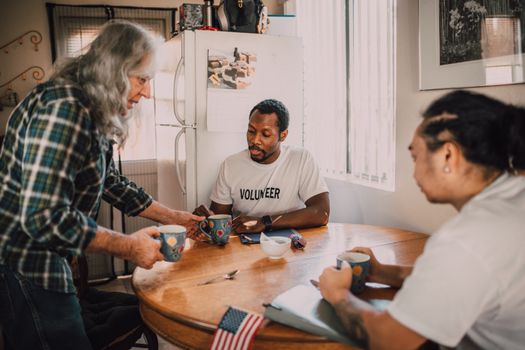
Three volunteers sharing coffee and ideas in a cozy kitchen setting, promoting community engagement. Photo: RDNE Stock project / Pexels
Selecting the appropriate nonprofit consulting services in the US requires a thoughtful and strategic approach. The market is saturated with options, from large, multidisciplinary firms to independent consultants specializing in niche areas. The key is to find a partner whose expertise, values, and approach align perfectly with your organization's specific needs and culture. The first step involves a clear internal assessment: what exactly are your challenges? Are you struggling with fundraising, seeking to refine your strategic direction, facing governance issues, or needing help with program evaluation? Defining your needs precisely will help narrow down the field of potential consultants. Once your needs are identified, research is paramount. Look for consultants or firms with a proven track record of success within the nonprofit sector, specifically in areas relevant to your organization. Review their case studies, client testimonials, and publications. Do they demonstrate a deep understanding of the unique regulatory, funding, and operational environments that characterize nonprofits? Pay attention to their specialization; a consultant strong in major gifts fundraising might not be the best fit for a complex technology implementation project, and vice versa. Consider their experience with organizations of similar size, mission, and scope to yours. A consultant who primarily works with large foundations might not be the most appropriate for a small, grassroots community organization. When evaluating potential partners, inquire about their methodology and approach. Do they offer a collaborative process that involves your staff and stakeholders, or do they prefer a more top-down approach? A collaborative model often fosters greater buy-in and ensures that solutions are sustainable long after the consultant's engagement ends. Ask for detailed proposals that clearly outline the scope of work, deliverables, timelines, and fee structure. Be wary of proposals that are vague or lack transparency. It's also crucial to assess cultural fit. Schedule initial conversations or interviews with shortlisted candidates. Do you feel a good rapport? Do they listen attentively to your concerns and ask insightful questions? A strong working relationship built on trust and mutual respect is vital for a successful engagement. Finally, check references diligently. Speak to their past clients to understand their experience, the quality of the deliverables, and the consultant's ability to meet deadlines and stay within budget. Investing in nonprofit consulting services is a significant decision, and a thorough due diligence process ensures you find a partner who can truly empower your organization to thrive and amplify its impact.

Avoiding Common Pitfalls: Maximizing Your Investment in Nonprofit Consulting

Group of volunteers wearing masks sorting donations with a laptop, promoting diversity and teamwork. Photo: Gustavo Fring / Pexels
Engaging nonprofit consulting services in the US can be a transformative experience for an organization, but only if done correctly. Several common pitfalls can undermine the effectiveness of a consulting engagement, leading to wasted resources and missed opportunities. Being aware of these can help nonprofits maximize their return on investment. **Common Pitfalls to Avoid:** * **Unclear Scope and Expectations:** One of the most frequent mistakes is not clearly defining the project's scope, objectives, and deliverables upfront. Without a precise understanding of what the consultant is expected to achieve, projects can drift, leading to scope creep, budget overruns, and dissatisfaction. A detailed Statement of Work (SOW) is crucial. * **Lack of Internal Buy-in:** If key staff members or board members are not on board with the consulting engagement, resistance can derail progress. It's essential to communicate the rationale for hiring a consultant and involve relevant stakeholders in the process from the beginning. * **Insufficient Resource Allocation:** Expecting a consultant to work miracles without providing necessary internal resources (time from staff, access to data, budget for implementation) is unrealistic. Consultants augment your team; they don't replace it. * **Failure to Implement Recommendations:** The most brilliant strategic plan or fundraising strategy is useless if it sits on a shelf. Organizations must be prepared and committed to implementing the consultant's recommendations, even if they involve significant change. * **Focusing Solely on Cost:** While budget is a critical consideration, choosing a consultant based purely on the lowest bid can be a false economy. Value, experience, and cultural fit should outweigh price as the primary decision factor. * **Ignoring Cultural Fit:** A consultant, no matter how skilled, may struggle if their working style or values clash with your organization's culture. This can lead to communication breakdowns and a less productive engagement. To maximize your investment, prioritize clear communication throughout the engagement, establish regular check-ins, and assign an internal project manager to liaise with the consultant. Foster a collaborative environment where feedback is encouraged, and be prepared to embrace change. By proactively addressing these potential challenges, nonprofits can ensure their partnership with consulting services in the US yields meaningful, sustainable results, propelling their mission forward with renewed vigor and strategic clarity.

Comparison

FeatureStrategic Planning ConsultantFundraising ConsultantOperational Efficiency ConsultantGovernance Consultant
Primary FocusLong-term vision, goalsRevenue generation, donor relationsProcess optimization, cost reductionBoard effectiveness, compliance
Key DeliverablesStrategic plan, SWOT analysisFundraising plan, grant proposalsProcess maps, efficiency reportsBoard policies, training modules
Typical Engagement Length3-6 months6-12 months (or ongoing)2-5 months1-3 months
Best ForOrganizations seeking directionOrganizations needing funding growthOrganizations needing streamlined opsOrganizations needing board strength

What Readers Say

"Our experience with nonprofit consulting services in the US was exceptional. They helped us craft a 5-year strategic plan that truly aligned with our community's needs, giving us a clear roadmap for growth and impact."

Sarah Chen · Boston, MA

"We brought in consultants to revamp our fundraising strategy, and the results were immediate. Our annual giving increased by 30% within the first year, thanks to their expert guidance on donor engagement."

David Ramirez · Austin, TX

"The nonprofit consulting services in the US we engaged helped us streamline our volunteer management process, reducing administrative overhead by 15% and freeing up staff time for program delivery. Highly recommend their operational expertise!"

Maria Lopez · Chicago, IL

"While the initial onboarding took a bit longer than expected, the strategic insights provided by our governance consultant were invaluable. Our board is now much more effective and aligned with our mission."

Ethan White · Denver, CO

"As a startup nonprofit, navigating compliance and establishing best practices felt overwhelming. The nonprofit consulting services in the US we used provided foundational support, ensuring we started on solid ground and avoided common legal pitfalls."

Jessica Kim · San Francisco, CA

Frequently Asked Questions

What types of nonprofit consulting services are available in the US?

Nonprofit consulting services in the US are diverse, covering areas such as strategic planning, fundraising and development, marketing and communications, board governance, organizational development, program evaluation, financial management, technology implementation, and human resources. Specialized consultants cater to specific sub-sectors like arts, education, healthcare, or environmental causes.

Is it worth the investment for a small nonprofit to hire a consultant?

Absolutely. Even small nonprofits can greatly benefit. Consultants can help establish strong foundations, secure initial funding, develop efficient processes, and build capacity that might otherwise take years to develop internally. The return on investment often comes from increased funding, operational efficiencies, and enhanced mission impact.

How do I choose the right nonprofit consultant for my organization?

Start by clearly defining your needs and objectives. Then, research consultants or firms with relevant expertise, a proven track record, and positive client testimonials. Assess their methodology, cultural fit, and request detailed proposals, comparing scope, deliverables, and fees. Always check references before making a final decision.

What is the typical cost of nonprofit consulting services in the US?

The cost varies widely based on the consultant's experience, the project's scope, duration, and complexity. Fees can range from hourly rates for specific tasks to fixed project fees or monthly retainers. It's crucial to get detailed proposals and understand what's included to ensure transparency and avoid hidden costs. Some consultants also offer sliding scales or pro bono work.

How do nonprofit consulting services differ from other business consulting?

While some business principles apply, nonprofit consulting uniquely understands the sector's mission-driven nature, reliance on philanthropy, specific regulatory environment (e.g., IRS 501(c)(3) status), and the dynamics of volunteer boards and diverse stakeholders. Consultants specializing in nonprofits are adept at balancing social impact with financial sustainability.

Who should use nonprofit consulting services US?

Any nonprofit organization, regardless of size or stage, that is facing significant challenges, planning for growth, seeking to improve efficiency, diversify funding, strengthen governance, or enhance its overall impact should consider nonprofit consulting services in the US. They are particularly beneficial during periods of transition, rapid growth, or when specialized expertise is needed.

What are the risks of not engaging with nonprofit consulting services?

Without external expertise, nonprofits risk stagnation, missed funding opportunities, operational inefficiencies, governance issues, and a reduced ability to adapt to changing environments. This can lead to burnout, decreased impact, and in severe cases, organizational instability or closure. Consulting can help mitigate these risks proactively.

What future trends are impacting nonprofit consulting services in the US?

Future trends include a greater emphasis on data-driven decision-making and impact measurement, digital transformation, diversity, equity, and inclusion (DEI) initiatives, cross-sector partnerships, and innovative fundraising models. Consultants are increasingly helping nonprofits navigate these complex and evolving areas to remain relevant and effective.

Ready to elevate your nonprofit's impact and achieve your mission with greater efficiency? Explore how professional nonprofit consulting services in the US can provide the strategic guidance and expertise you need to thrive. Connect with an expert today and unlock your organization's full potential.

Topics: nonprofit consulting services USnonprofit strategy consultingfundraising consulting nonprofitnonprofit organizational developmentnonprofit governance consulting
Leo List

DK Escorts LU Escorts AT Escorts SE Escorts FI Escorts CH Escorts DE Escorts HR Escorts IE Escorts GR Escorts CZ Escorts NO Escorts BE Escorts FR Escorts SI Escorts IL Escorts NL Escorts PL Escorts HU Escorts ES Escorts IT Escorts PT Escorts SK Escorts RO Escorts ZA Escorts UY Escorts US Escorts UK Escorts NZ Escorts AU Escorts
Brampton weed
Adultwork EstrelaBet Vai de Bet R7 Bet Betão Galera Bet Rainbet Bet9ja Shop SportyBet BetKing Sisal Loto Foot Hollywoodbets YesPlay Odibets RushBet Jugabet BetWarrior BetCity MSport betPawa Fortebet