Cost-Effective Home Cannabis Storage Ideas: Preserve Quality
July 31, 2026 15 min read 2,983 words
Unlock smart, affordable ways to keep your cannabis fresh, potent, and safe for longer, maximizing its value.
Start Storing Smart
Understanding Cannabis Degradation: Why Storage Matters
 Photo: Jess Loiterton / Pexels
For cannabis enthusiasts and medical patients alike, preserving the quality, potency, and flavor of their product is paramount. Far too often, valuable cannabis is left to degrade, losing its efficacy and aromatic profile due to improper storage. This isn't just a matter of preference; it's about maximizing the therapeutic and recreational benefits you paid for. Understanding the science behind cannabis degradation is the first step towards implementing effective and, crucially, cost-effective storage solutions.
The primary culprits behind cannabis degradation are light, air (specifically oxygen), temperature, and humidity. Each of these environmental factors plays a distinct role in breaking down the delicate compounds that give cannabis its unique characteristics. Ultraviolet (UV) light, whether from direct sunlight or even strong indoor lighting, is a major enemy. UV rays actively degrade cannabinoids, particularly THC, converting it into cannabinol (CBN), a cannabinoid known for its sedative properties but with significantly reduced psychoactive effects. This means your potent Sativa could slowly transform into a less effective, sleep-inducing product if exposed to light.
Oxygen, present in the air, also contributes to the breakdown of cannabinoids and terpenes through oxidation. Terpenes, the aromatic compounds responsible for cannabis's diverse scents and flavors, are highly volatile and easily evaporate or oxidize when exposed to air. This results in a loss of aroma, flavor, and potentially the 'entourage effect,' where cannabinoids and terpenes work synergistically. An airtight seal is therefore not just a recommendation, but a necessity. Imagine leaving a fine wine uncorked; the oxidation would quickly diminish its quality. The same principle applies to cannabis.
Temperature also plays a critical role. High temperatures accelerate the degradation processes initiated by light and air, causing cannabinoids and terpenes to break down faster. Additionally, excessive heat can dry out the cannabis, making it harsh to consume and further diminishing its flavor. Conversely, while cold temperatures can slow degradation, extreme cold, such as that found in freezers, can make trichomes (the resin glands containing cannabinoids and terpenes) brittle, causing them to break off easily. This loss of trichomes directly translates to a loss of potency and quality. The goal is a stable, cool environment, not freezing.
Finally, humidity is a double-edged sword. Too much humidity creates a perfect breeding ground for mold and mildew, which can render cannabis unsafe for consumption and lead to respiratory issues. Too little humidity, on the other hand, will dry out the cannabis, making it harsh, crumbly, and significantly reducing its terpene content. The ideal relative humidity for cannabis storage is generally between 58% and 62%. Maintaining this balance is crucial for preserving both quality and safety. Investing in a small hygrometer can be a
smart, low-cost solution for monitoring humidity levels.
By understanding these factors, we can strategically select and implement storage methods that directly counteract them, ensuring our cannabis remains fresh, potent, and enjoyable for as long as possible. The good news is that achieving this doesn't require expensive, specialized equipment. Many cost-effective home cannabis storage ideas leverage common household items and simple principles to create optimal conditions, allowing you to get the most out of your purchase without additional financial strain.
Budget-Friendly Containers: Your First Line of Defense
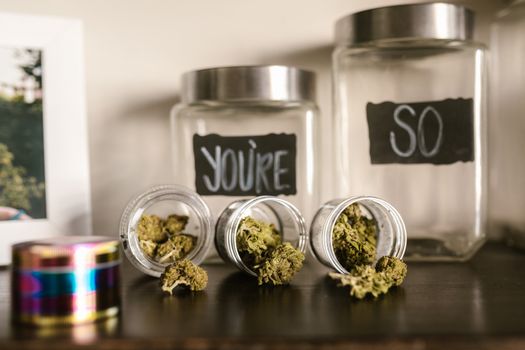 Photo: RDNE Stock project / Pexels
When it comes to cost-effective home cannabis storage ideas, the container itself is your most important tool. You don't need fancy, purpose-built cannabis jars to achieve excellent preservation. Many affordable and readily available options can do the job just as well, if not better, than their expensive counterparts. The key is to prioritize airtightness, opacity, and material safety.
Glass jars, particularly mason jars, are arguably the gold standard for cannabis storage, and they are incredibly budget-friendly. You can often find them in bulk at grocery stores, hardware stores, or even secondhand. Their non-porous nature means they won't leach chemicals into your cannabis or absorb its aromas, preventing flavor contamination. The airtight seal of a mason jar, achieved with its two-part lid (a flat disc and a screw band), is excellent at keeping oxygen out and terpenes in. For optimal protection, choose amber or dark-colored glass jars, or store clear jars inside an opaque box or cabinet to block out light. If clear jars are all you have, wrapping them in aluminum foil or placing them in a dark cloth bag can serve as an effective, free light barrier.
Another excellent, often overlooked option is vacuum-sealable containers. While a dedicated vacuum sealer machine might be an initial investment, many brands now offer manual hand pumps and reusable vacuum-sealable bags or containers that are quite affordable. These systems remove almost all oxygen, drastically slowing down degradation. Look for food-grade vacuum seal bags or hard plastic containers designed for vacuum sealing. Ensure they are BPA-free if using plastic to avoid potential chemical leaching.
Beyond specialized food storage, consider repurposing existing containers. Old coffee cans, if cleaned thoroughly and lined with a food-safe bag, can offer an opaque and relatively airtight solution, especially if their lids create a tight seal. Similarly, some types of spice jars, if large enough and with good seals, can work for smaller quantities. The crucial element here is ensuring they are impeccably clean and free from any residual odors that could transfer to your cannabis.
For truly minimal cost, even heavy-duty Ziploc freezer bags can offer a temporary solution, particularly if you can manually press out as much air as possible. However, they are not truly airtight over the long term and do not protect against light or crushing. They are best reserved for short-term transport or as an inner layer within a more robust, opaque container. When using bags, always opt for freezer-grade bags as they are thicker and less permeable to oxygen than standard storage bags.
Remember, the material of the container matters. Glass is inert, meaning it won't react with your cannabis. Food-grade plastics are generally safe, but always check for BPA-free labels. Avoid thin, flimsy plastics or anything not designed for food storage, as they can degrade and potentially contaminate your cannabis. By focusing on these accessible and inexpensive container types, you lay a solid foundation for effective and cost-efficient cannabis preservation.
You may also find mj420.delivery useful.
Controlling the Environment: Humidity and Temperature on a Budget
 Photo: Gustavo Fring / Pexels
After securing an airtight, opaque container, the next critical step in Cost-Effective Home Cannabis Storage Ideas is managing the internal environment, specifically humidity and temperature. These two factors are often overlooked but are paramount to preventing mold, preserving terpenes, and maintaining overall quality. Fortunately, effective environmental control doesn't require expensive gadgets.
Humidity control is perhaps the most vital aspect to master. Too much moisture leads to mold and mildew, which can make your cannabis dangerous to consume. Too little moisture results in dry, brittle cannabis that loses its flavor and potency. The sweet spot for relative humidity (RH) is typically between 58% and 62%. Achieving this balance on a budget is surprisingly straightforward.
The most cost-effective solution for humidity control is the use of humidity packs, such as those made by Boveda or Integra Boost. While they represent a small initial investment, these packs are incredibly efficient and last for months, making them highly economical in the long run. They work by either releasing or absorbing moisture to maintain a precise RH level within your sealed container. Simply place one pack in your airtight jar, and it will do the work for you. For larger containers or more cannabis, you might need two. These packs are far superior to DIY methods like orange peels or bread, which can introduce unwanted moisture, mold, or off-flavors.
If even humidity packs are beyond your immediate budget, consider using a small, inexpensive hygrometer (a device to measure humidity) to monitor the RH inside your jar. You can find these for just a few dollars online or at pet stores (often sold for terrariums). If the humidity is too high, you might briefly air out the container in a dry environment. If it's too low, a tiny, fresh piece of a clean, unflavored tortilla (not bread or fruit, which harbor mold) can temporarily add moisture, but this method requires extreme caution and constant monitoring to prevent mold. It's truly a last resort, and humidity packs remain the safest and most reliable budget-friendly option.
Temperature control is simpler to manage with passive methods. The ideal storage temperature for cannabis is cool, generally below 70°F (21°C), and consistent. The goal is to avoid extremes and rapid fluctuations. The most cost-effective solution is to find a naturally cool, dark, and stable place in your home. This could be a pantry, a basement, a closet, or even a drawer in a rarely used cabinet. Avoid direct sunlight, heat-generating appliances, and areas prone to significant temperature swings, such as attics, garages, or window sills. Remember, consistency is key; constant changes in temperature can stress the plant material and accelerate degradation.
Refrigeration is generally not recommended for long-term cannabis storage due to the high humidity and potential for condensation, which can lead to mold. Freezing, as mentioned, can make trichomes brittle and easily break off. So, a stable, room-temperature or slightly cooler environment is preferable. By combining airtight, opaque containers with an affordable humidity pack and a strategically chosen cool, dark spot, you can create an optimal preservation environment without significant expense, ensuring your cannabis retains its potency and flavor for extended periods. This holistic approach to
cannabis care is both effective and accessible.
Advanced Yet Affordable Tips for Longevity and Security
 Photo: Dad Grass / Pexels
Beyond the basics of containers, humidity, and temperature, there are several advanced yet affordable tips that can further enhance your cannabis storage, focusing on both longevity and security. These strategies leverage common sense and inexpensive solutions to add layers of protection, ensuring your valuable product remains pristine and out of the wrong hands.
One crucial tip for maximizing longevity is to minimize the air space within your container. While an airtight seal is vital, a jar that's mostly empty but sealed still contains a significant amount of oxygen. If you have a small amount of cannabis in a large jar, consider transferring it to a smaller jar that better fits its volume. This reduces the amount of oxygen trapped alongside your cannabis, further slowing oxidation. If you only have one large jar, you can use inert gas, like argon or nitrogen (sometimes found in wine preserver sprays), to displace the oxygen before sealing. While not free, a single can of wine preserver can last for many uses and is a worthwhile investment for very high-value or long-term storage.
Another often-overlooked aspect is minimizing handling. Each time you open your storage container, you introduce fresh oxygen and expose your cannabis to ambient humidity and temperature fluctuations. To mitigate this, consider dividing larger quantities into smaller, individual-use jars. This way, you only expose a small portion of your stash to the elements when you access it, keeping the bulk of your cannabis in its ideal, undisturbed environment. This 'portion control' approach is remarkably effective and costs nothing more than a few extra small jars.
For added security, especially in a household with children, pets, or curious roommates, consider a simple lockable container. While specialized cannabis safes exist, a basic lockable toolbox or a small, inexpensive safe from a discount store can serve the purpose perfectly. Many come with combination locks or keys and can be easily hidden away in a closet or under a bed. This not only protects your cannabis from environmental factors but also adds a crucial layer of safety and prevents accidental consumption.
Labeling your containers is another simple yet effective tip. Clearly mark each jar with the strain name, date of purchase or harvest, and any relevant potency information. This helps you keep track of your inventory, prioritize older cannabis for consumption, and quickly identify different strains without having to open and inspect each jar. A permanent marker or simple adhesive labels are all you need, costing virtually nothing.
Finally, regularly inspect your stored cannabis. Even with the best storage practices, it’s wise to periodically check for any signs of mold, changes in aroma, or excessive dryness. Catching an issue early can prevent the loss of your entire stash. This vigilance costs nothing but a few moments of your time and is a critical part of responsible cannabis ownership. By integrating these advanced yet affordable strategies, you can significantly prolong the life and quality of your cannabis, ensuring a consistent and safe experience.
